What to Check Before Buying a Used Outboard Motor (Our $300 1972 Johnson 6HP)
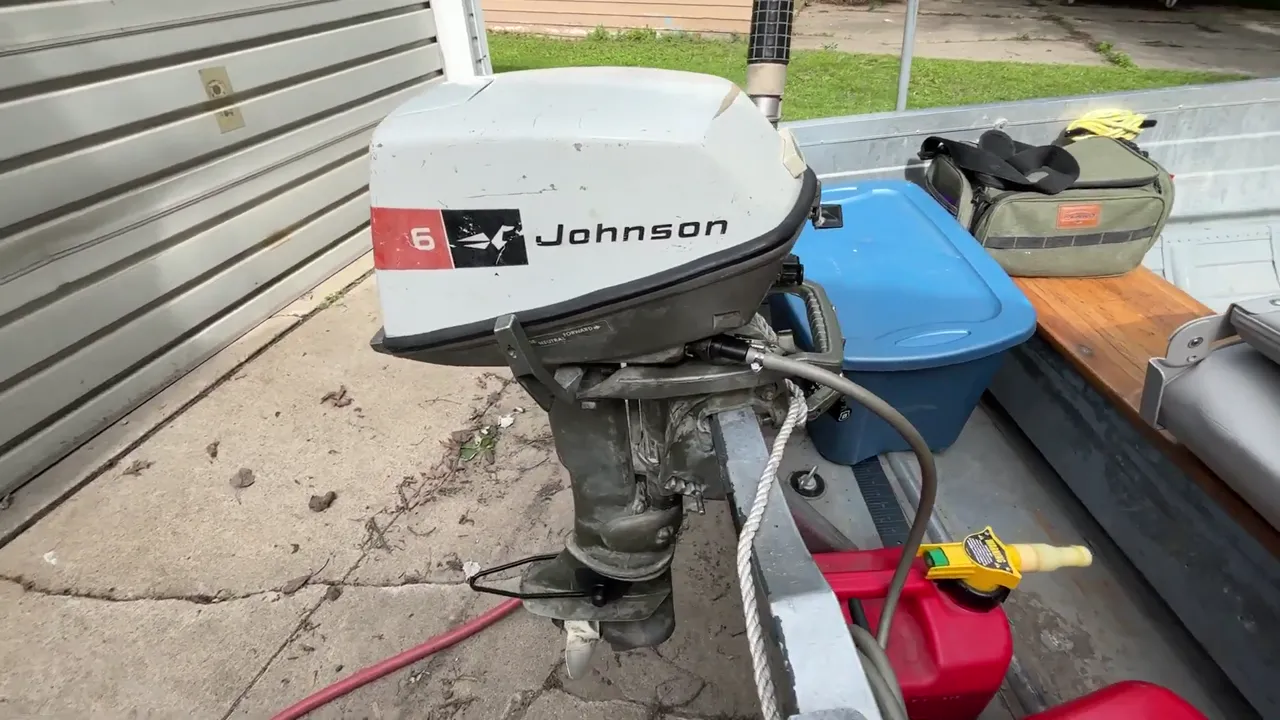
I picked up this 1972 Johnson 6 horse for $300 here in Iowa to run on our 1961 Sea King. I knew going in there would be some stuff to fix, and I bought it anyway. Here are the checks worth knowing before you hand over cash for any used outboard, plus the honest part nobody talks about: you have to pick your battles.
This post contains Amazon affiliate links. As an Amazon Associate, I earn from qualifying purchases at no extra cost to you. I only link gear I've personally bought and used. Everything I mention is in our Amazon storefront.
In this post
- Pick your battles with the seller
- Spin the prop and look at the lower unit
- Check the lower gear oil
- Look under the cowl
- Read the spark plugs
- Start it and listen to the idle
- Confirm water is flowing
- Run a compression test
- What we found on ours
- Used outboard FAQs
Watch the full walkthrough
Aaron Goes Outdoors runs through every check on a $300 1972 Johnson 6HP outboard, from the prop to a compression test.
Pick your battles with the seller
You can run through every check on this list, but if you are buying a $300 motor from a regular guy in his driveway, most sellers are not going to love you pulling the cowl, draining the gear oil, and running a compression test before any money changes hands.
So split it up:
- Do at the seller’s place: spin the prop, look over the lower unit, start it, listen to the idle, and confirm water is flowing. These are quick and nobody minds.
- Ask about, then decide: pulling the cowl and the spark plugs. Some sellers are fine with it, some are not.
- Save for after you get it home: draining the gear oil and running a full compression test. Price the motor knowing you have not done these yet.
▶ See the motor and what I paid in the video
1. Spin the prop and look at the lower unit
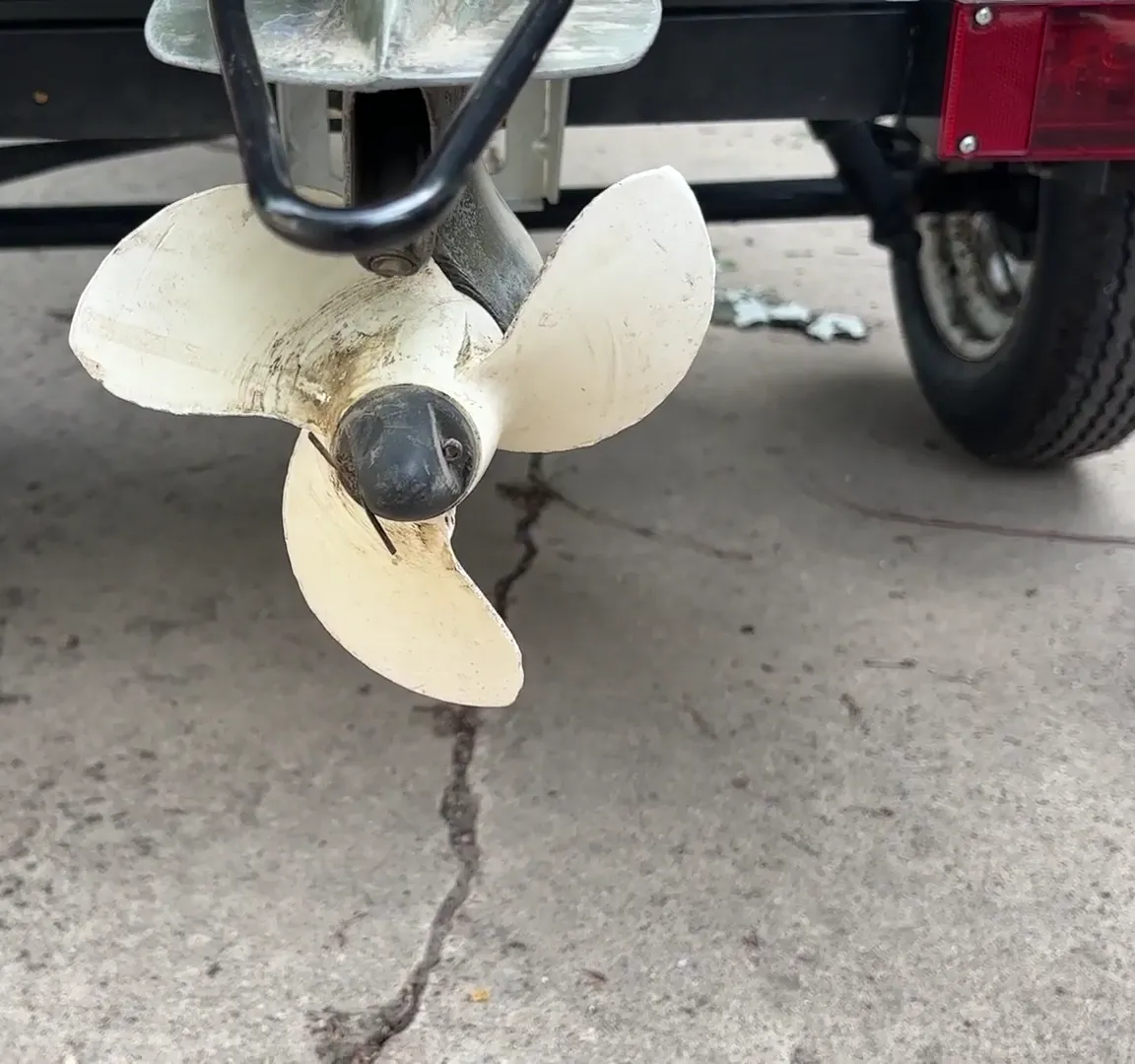
Start with the easy one. Put it in neutral and spin the prop by hand. It should turn smoothly without grinding or catching. While you are down there, look at the prop for chips and bent blades, and look over the lower unit and skeg for cracks or obvious damage.
▶ See the prop check in the video
2. Check the lower gear oil
This is the single best look at what is going on inside the lower unit. Healthy gear oil is clean and amber. If it comes out milky, like a chocolate milkshake, water is getting in past a seal. Ours came out milky and pink, which told me right away the lower unit seals need work.
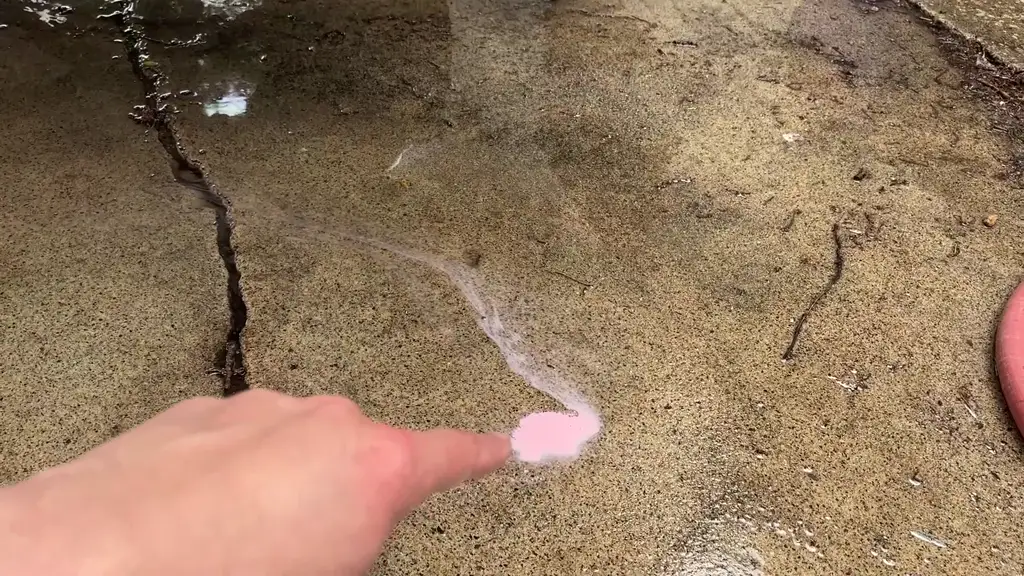
If you do drain it, refill from the bottom up. I use Quicksilver SAE 90 gear lube with an Attwood gear lube pump that threads right onto the bottle. I walk through the full oil change, and what milky oil really means, in this follow-up video.
▶ See the gear oil check in the video
3. Look under the cowl
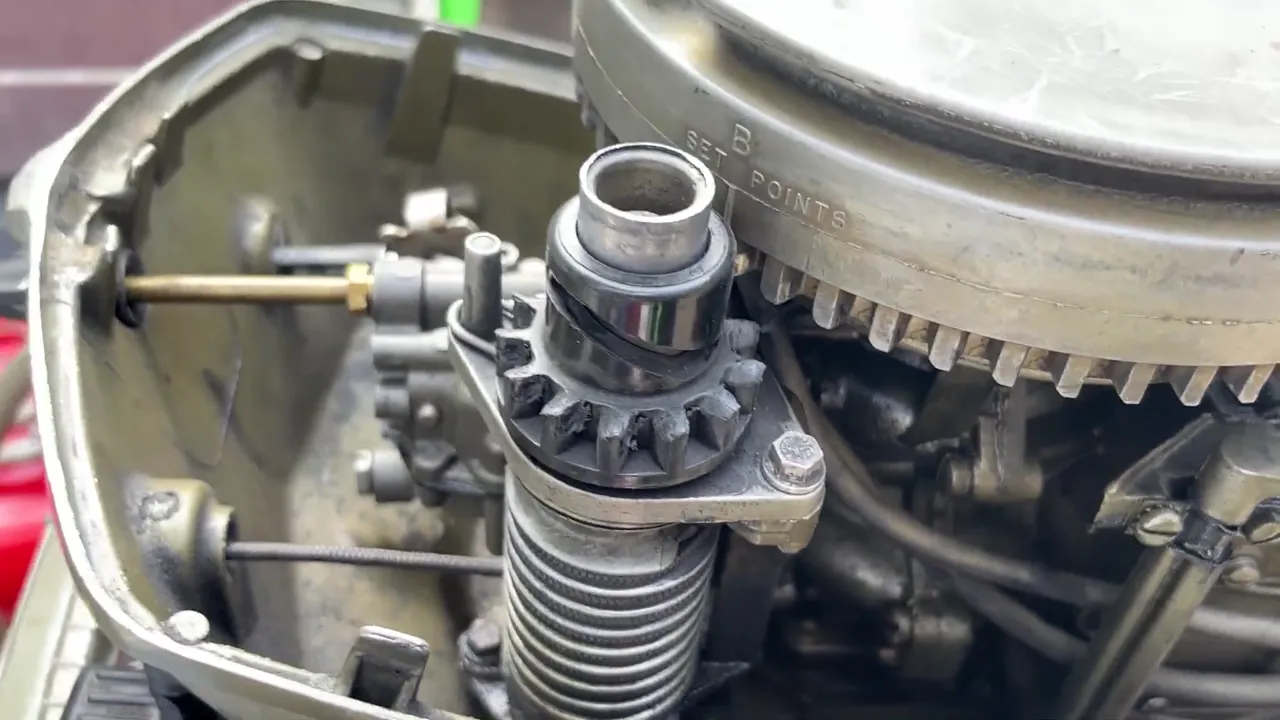
Pop the cover off and take a look at the powerhead. You are looking for obvious problems: corrosion, cracked or brittle fuel lines, chewed wiring, missing parts, or signs that someone has been in there with the wrong tools. An old motor will not look new, but it should look cared for.
▶ See what is under the cover in the video
4. Read the spark plugs
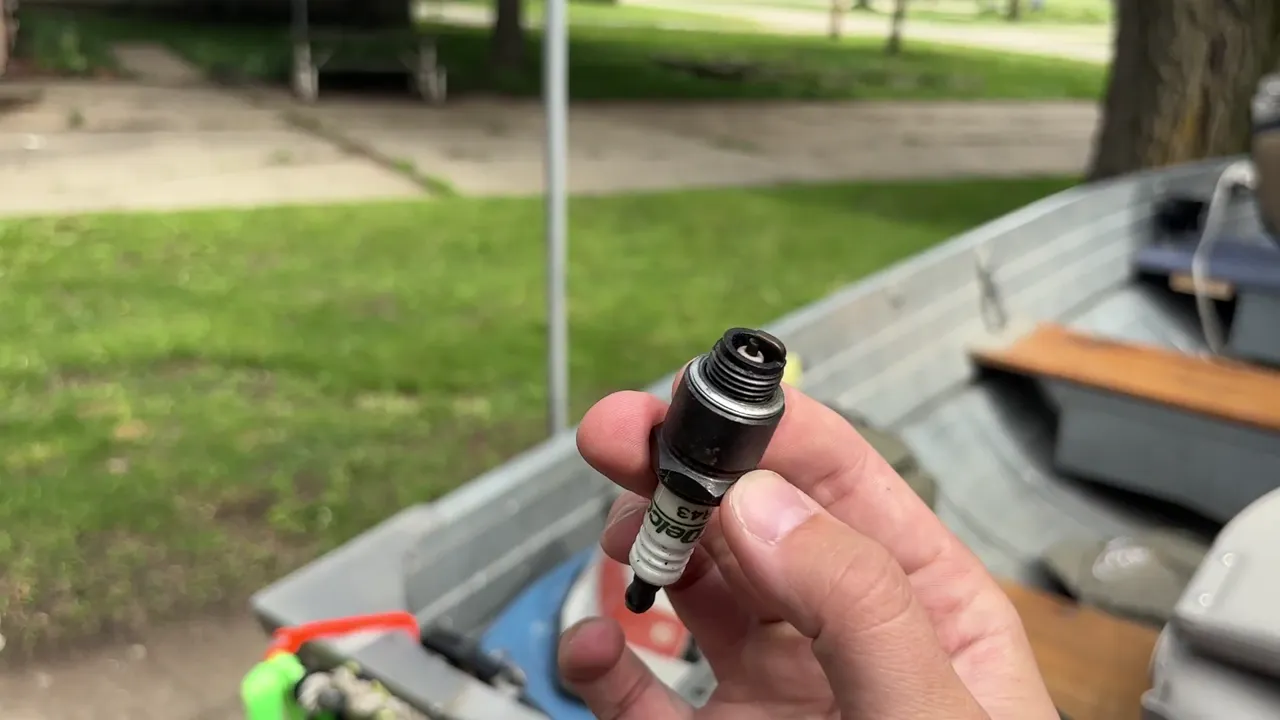
Pull the plugs and look at the tips. As a general rule, a light tan or brown color is a healthy sign. Heavy black soot, a wet oily tip, or white crusty buildup are all worth asking about. It is a cheap, quick way to get a read on how the motor has been running.
▶ See the spark plugs in the video
5. Start it and listen to the idle
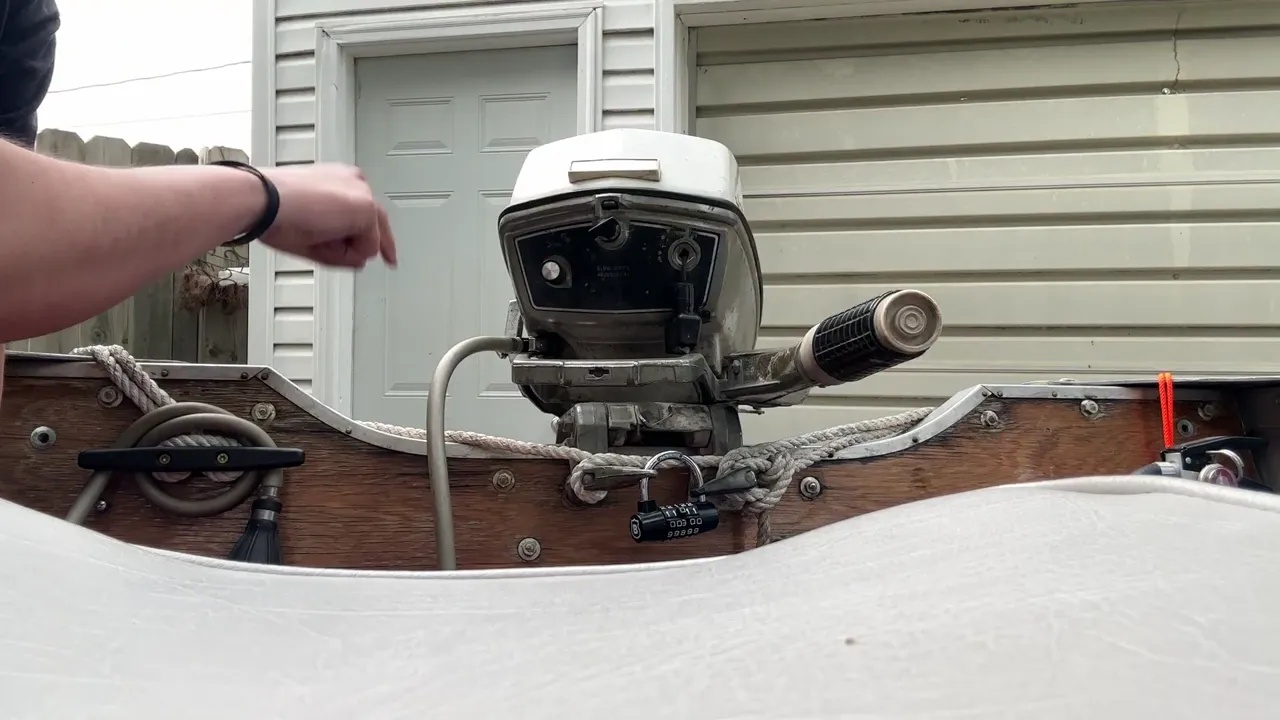
Ask the seller to start it cold if you can. Watch how many pulls it takes, then let it idle and listen. A smooth, steady idle is what you want. A rough or hunting idle often points to a dirty carb, which is usually a fixable job, but it is worth knowing before you agree on a price.
▶ See the start and idle test in the video
6. Confirm water is flowing
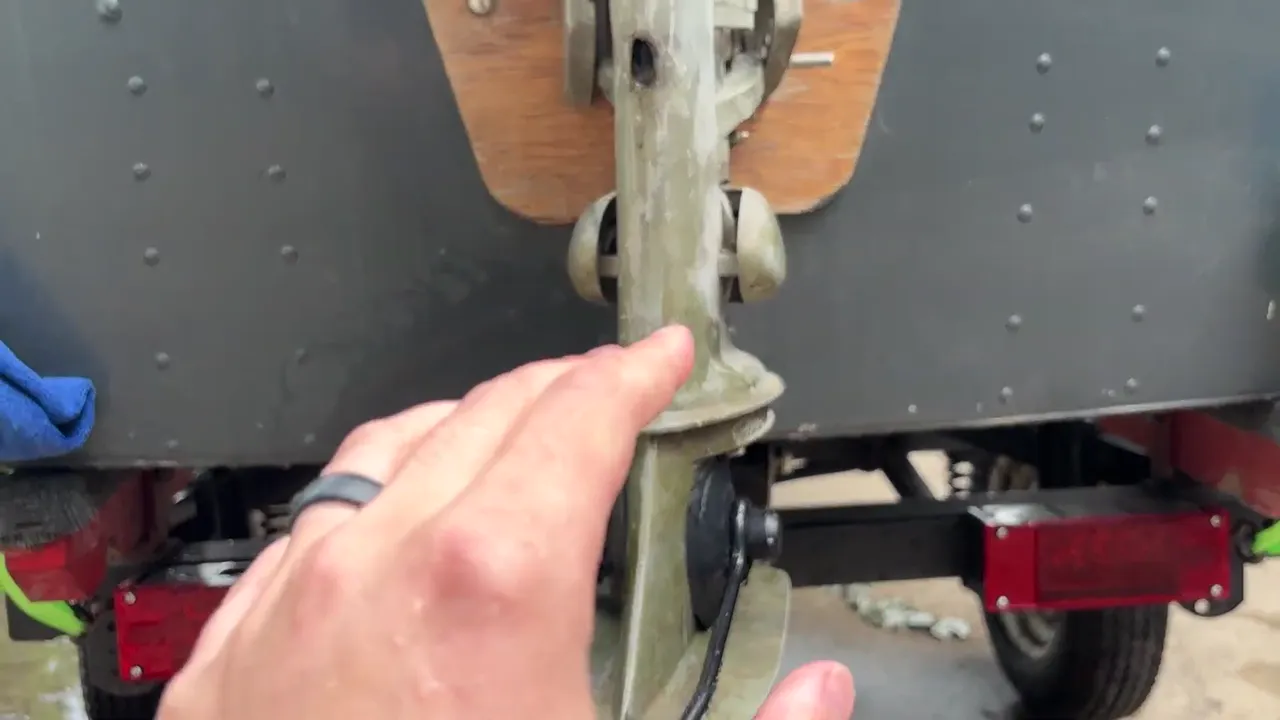
An outboard has to pump water through to keep cool. If it is running on muffs or in a tank, confirm water is actually moving through it. On ours, it does push water through, we just had to hold the ears close to where the water is sucked in. If you cannot confirm water flow, assume the water pump impeller needs replacing and price it in.
▶ See the water flow check in the video
7. Run a compression test
This is the check that tells you the most about the health of the powerhead. I use this Clatoon compression tester kit. Thread the gauge into the spark plug hole, pull the motor over several times until the needle stops climbing, and write it down. Do the same on each cylinder.
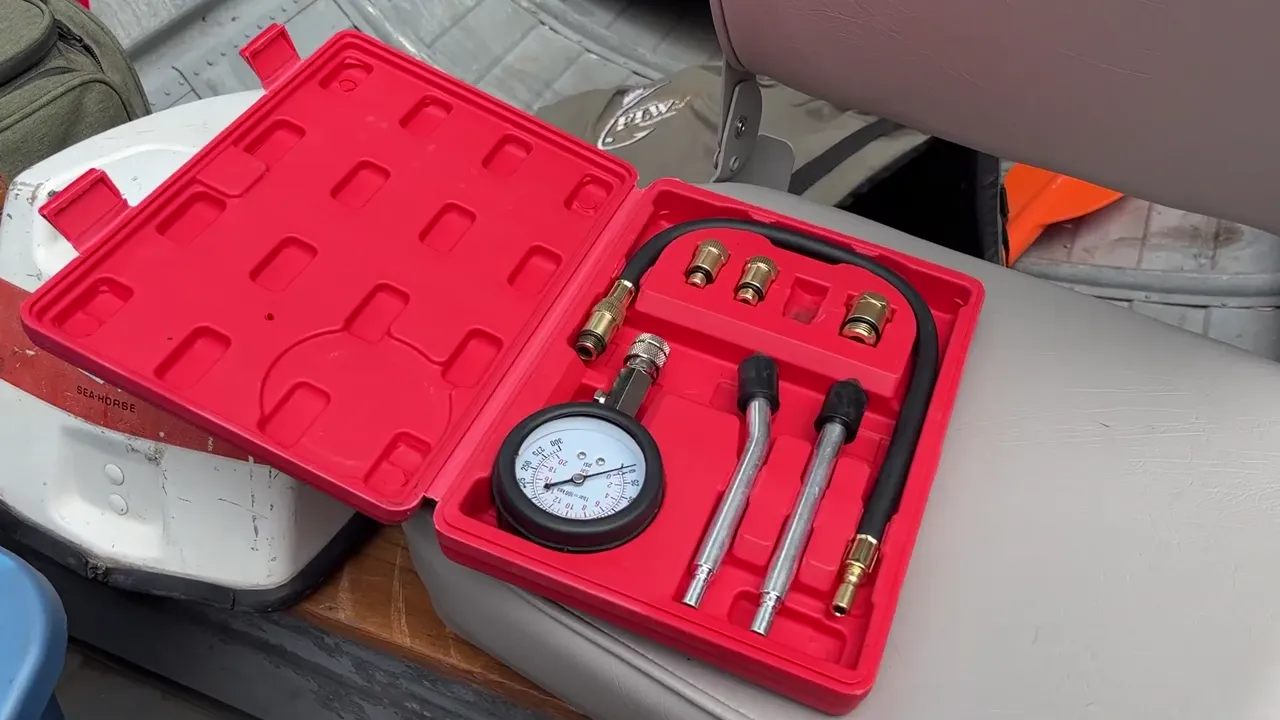
As a general rule, what you care about most is that the cylinders read close to each other. One cylinder way lower than the other is a red flag. Check your motor’s manual for its specific numbers.
▶ See how to run the compression test in the video
What we found on ours
This one has some things to fix. The gear oil came out milky, so the lower unit needs new seals, and I have the parts on order to rebuild the lower end properly. The idle is a little rough, so the carb probably needs a clean.
But for $300, I am not worried about it. I have already had it out fishing a couple of times on the Sea King, and it runs great once you give it some gas.

▶ See my final thoughts in the video
Used outboard FAQs
What should I check before buying a used outboard motor?
Spin the prop, look over the lower unit, check the gear oil, look under the cowl, read the spark plugs, start it and listen to the idle, confirm water flow, and run a compression test. Do the quick ones at the seller’s place and save the bigger ones for after if you need to.
What does milky gear oil mean on an outboard?
Milky gear oil means water is getting into the lower unit, usually past a worn seal. It is fixable, but plan on replacing the lower unit seals.
Is a $300 used outboard worth it?
It can be, if you go in expecting some work. Ours needed lower unit seals and probably a carb clean, and it still runs great on the water. Price it based on the checks you could and could not do.
Do I need a compression tester to buy a used outboard?
You do not have to have one at the sale, but it is the best way to know the health of the powerhead. It is a cheap tool to own, and you can run the test once you get the motor home.
Will a seller let me run all these checks?
Not always. Most driveway sellers are fine with you spinning the prop and watching it run. Pulling the cowl, draining oil, and testing compression are bigger asks, so pick your battles.
Final thoughts
You do not need to be a mechanic to buy a used outboard with confidence. Know which checks are quick, which ones matter most, and which ones you can save for after the deal. Use them where you can, price in the ones you could not do, and you will buy with way more confidence than most people.
Every part and tool I have used on the boat is in our 1961 Sea King gear list. For more vintage boat and Iowa fishing content, subscribe to Aaron Goes Outdoors on YouTube.